
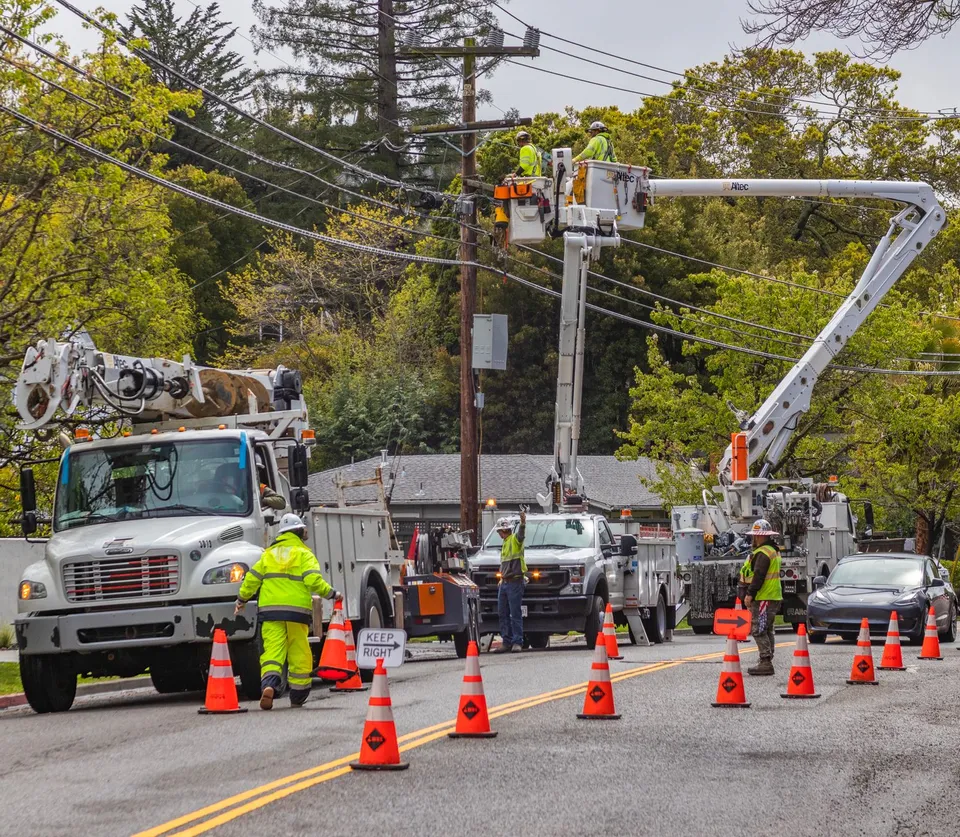
Brainerd is often described through its lakes, trails, and summer traffic, but that only tells part of the story. The more interesting truth is that the city works because so many ordinary systems are in place and, in a small city, those systems touch nearly everyone. Brainerd’s population was estimated at 14,400 in July 2024, with 6,327 households, 21.4% of residents under 18, and 18.3% age 65 or older. Those numbers point to a community that is both family-oriented and aging in place, which means school schedules, healthcare access, transportation, and utility reliability matter every day, not just during tourist season.
A city that runs on shared systems
One of Brainerd’s defining features is that many of its most important services do not stop at the city line. Brainerd Public Utilities says it has served the community since 1892 and provides electric, water, and wastewater service in Brainerd, parts of Baxter, and surrounding townships. Its financial statements also note that it delivers electric service to portions of Baxter and treats all of Baxter’s wastewater. That kind of overlap is easy to miss, but it is exactly what keeps the local map practical instead of political.
Transit tells the same story. The Brainerd/Baxter dial-a-ride service operates weekdays from 6:00 a.m. to 6:00 p.m., with dispatch hours from 7:30 a.m. to 4:30 p.m., and it is listed as serving the Brainerd, Baxter, Crosby, Pequot Lakes, and Pine River areas across Crow Wing County and Cass County. The fare structure also shows how the system is designed for real-life decisions: Brainerd-originating trips cost $3 in advance or $5 same day, while Baxter-originating trips cost $7 in advance or $11 same day. In other words, the service is not just a convenience; it is a carefully managed piece of regional mobility.
Brainerd is still a service center
The city’s economy reflects that role. Census QuickFacts shows Brainerd with about $427.246 million in health care and social assistance receipts, $333.615 million in retail sales, and $48.282 million in transportation and warehousing receipts in 2022. Those are not the numbers of a place that exists only for visitors. They describe a working city that serves residents, nearby towns, commuters, and the broader Lakes Area.
That matters because a service center has to do many small things well. People need places to work, shop, get care, move around, and keep homes heated, cooled, and connected. Brainerd’s value is that it supplies those basics in a compact area where daily errands do not always require a long drive. When those pieces fit together, the city becomes more resilient than its size suggests.
The practical side of living here
Housing costs help explain why this balance matters. Brainerd’s median gross rent was $848 and the median value of owner-occupied homes was $178,600 in the QuickFacts snapshot. Those figures do not tell the whole affordability story, but they do suggest a city where many households still have to watch budgets closely. Reliable transit, stable utilities, and nearby services can make that budget stretch more effectively than scenery alone ever could.
That is the real Brainerd story: not just a destination, but a place where the systems underneath daily life do a lot of quiet work. The city’s strength is not that everything happens inside one boundary. It is that enough of the important pieces connect across boundaries to make everyday life feel possible, predictable, and local. For residents, that may be the most valuable feature of all.