
Brainerd is easy to describe as a lake town, but that misses what makes the city work day after day. The more useful story is not a single landmark or a single downtown block. It is the collection of practical pieces that let people get to work, keep the lights on, move between nearby communities, and solve ordinary problems without turning every errand into a road trip.
A city built to share responsibility
Brainerd and Baxter may sit side by side, but they are not interchangeable. Brainerd’s estimated population was 14,400 in July 2024, while Baxter’s was 9,217 in July 2025, and the two cities also show different housing profiles and costs. That matters because many local systems have been built to serve a region, not a single municipal line. In other words, the way Brainerd functions is tied to the way nearby communities function too.
One of the clearest examples is transit. Brainerd & Crow Wing Public Transit runs Monday through Friday, from 6:00 a.m. to 6:00 p.m., with dispatch hours from 7:30 a.m. to 4:30 p.m. and an AI dispatcher outside regular dispatch hours. It is not a niche service for one type of trip. It is a general public option, with fares that vary by origin and booking timing, and with a service area that reaches beyond Brainerd and Baxter into places such as Crosby, Pequot Lakes, and the Pine River area of Cass County. That kind of reach turns the region into a more connected place for workers, students, and anyone trying to get across town without a private car.
The systems people notice only when they stop working
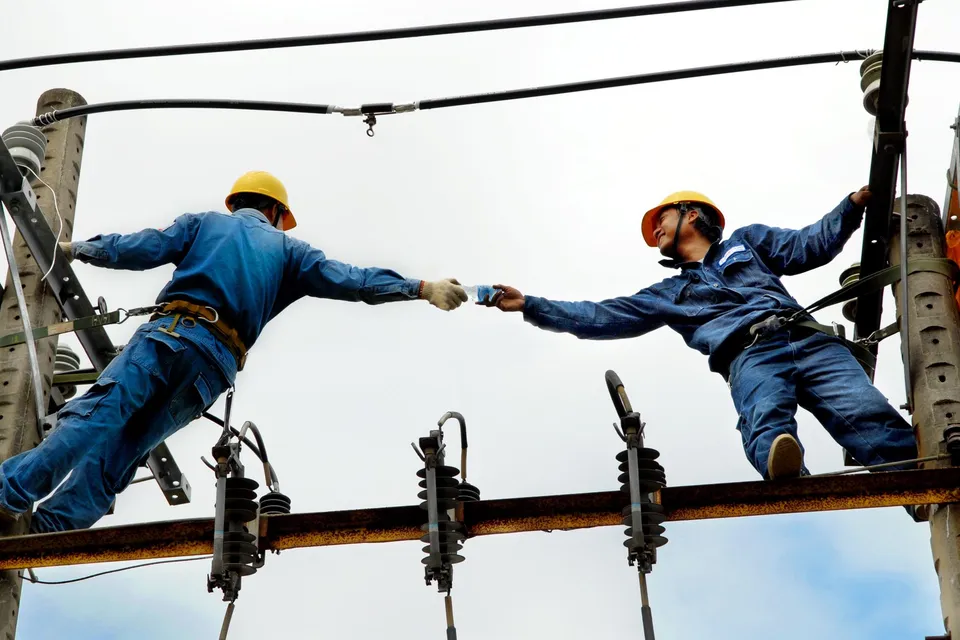
Utilities are another reminder that a city is more than its postcard moments. Brainerd Public Utilities says it has served the community since 1892 and provides electric, water, and sewer service in Brainerd, parts of Baxter, and surrounding townships. Its audited statements also show that it provides electric distribution to portions of Baxter and treats 100% of Baxter’s wastewater. That is the kind of behind-the-scenes arrangement most residents rarely think about until there is an outage, a billing question, or a major repair.
The same practical logic shows up in public safety and local infrastructure. The Brainerd Fire Department is described by the city as serving not only Brainerd but also Baxter and six townships, which tells you something important: the city’s emergency backbone is regional by design. Brainerd’s role also stretches beyond fire halls and utility rooms. MnDOT’s airport directory lists Brainerd Lakes Regional Airport as a place where Brainerd & Crow Wing Transit can connect travelers to the ground transportation network, linking air access back to ordinary local mobility.
Why this matters to daily life
These links are not abstract. Crow Wing County’s 2015 inflow-outflow data show a county where commuters move in both directions: 32.8% of jobs in the county were filled by people who live elsewhere, and 34.9% of employed residents worked outside the county. That is a reminder that “local” in the Brainerd Lakes area often means regional rather than strictly municipal. People live in one place, work in another, and depend on systems that were built with that pattern in mind.
Housing support follows the same pattern. Brainerd HRA says eligible families find their own rental unit in Crow Wing County, with payment standards effective January 1, 2026. That countywide geography matters because it treats housing search, not just city boundaries, as the real unit of need. For residents, it means the practical map of Brainerd includes nearby towns, commuting corridors, and the service desks that connect them.
There is also a skills side to this story. Central Lakes College remains part of the region’s everyday infrastructure, with published program listings and tuition information that help residents move into new jobs or advance in the ones they already have. For a place like Brainerd, that kind of local training pipeline is not a side note. It is one more reason the city can support both stability and change.
That is the real Brainerd advantage: not spectacle, but coordination. Transit, utilities, public safety, housing support, and training all overlap just enough to make ordinary life easier. The result is a city that works best when you look at it as a network of useful relationships rather than a single dot on the map.