
Brainerd can look like a compact city on the map, but everyday life here is built on systems that reach past the city line. Transit, utilities, public safety, housing support, and job access all connect Brainerd with Baxter, Crow Wing County, and nearby communities in ways that residents feel every day, even when they are not thinking about it. That is the real story: Brainerd works not because every need is contained inside one boundary, but because a web of shared services makes the whole area function.
Transit that turns distance into a normal errand
The Brainerd/Baxter dial-a-ride system is a good example of how the area stays connected. The service runs Monday through Friday from 6:00 a.m. to 6:00 p.m., with dispatch support during the day and an A.I. dispatcher available outside normal dispatch hours for booking, canceling, and monitoring trips. Fares are also structured to shape behavior: Brainerd-originating trips cost less than Baxter-originating trips, and same-day trips cost more than advance bookings. The Minnesota Board on Aging listing shows the service area extends beyond the two core cities into the Crosby and Pequot Lakes areas of Crow Wing County and the Pine River area of Cass County.
That matters because transit is not just about medical rides or one-off appointments. It helps residents get to work, reach services, and reduce the number of trips that require a private car. In a region where jobs, clinics, schools, and shopping are spread across a wider geography, dial-a-ride becomes part of the basic infrastructure of getting through the week.
Utilities that cross city lines without much fanfare
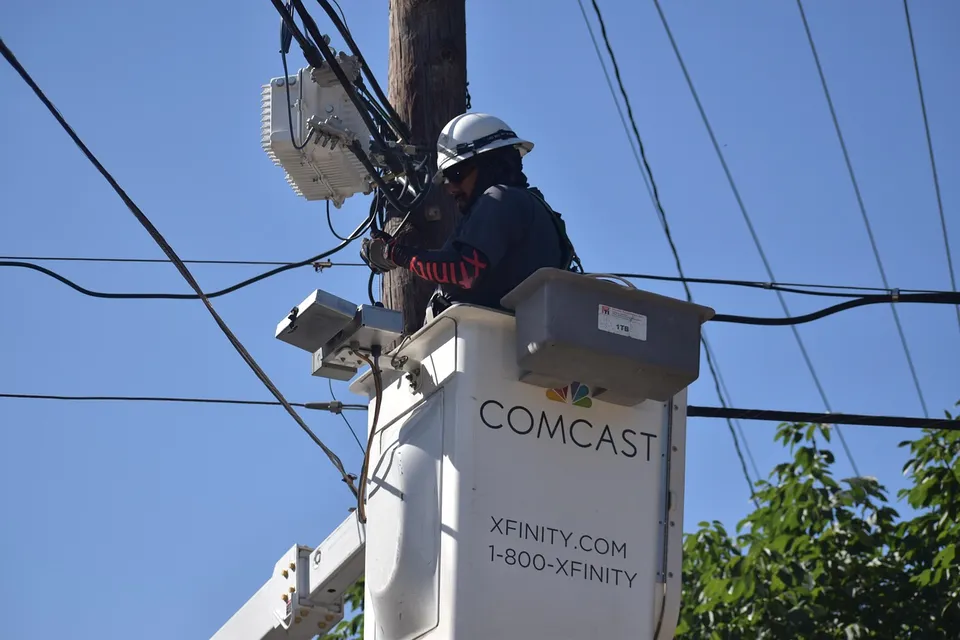
Some of the most important Brainerd-area institutions are easy to overlook because they rarely make headlines. Brainerd Public Utilities describes itself as a municipally owned utility that has served the community since 1892, providing electric, water, and sewer service in Brainerd and extending into parts of Baxter and surrounding townships. Its audited financial statements also note that BPU provides electric distribution to portions of Baxter and treats 100% of the City of Baxter’s wastewater. That is a lot of regional cooperation hiding inside ordinary household services.
Baxter’s own public works department still matters in the middle of that larger system. The city handles streets, water, sanitary sewer, storm water, and related facilities, which means residents and businesses experience a local point of contact even when the underlying service network is regional. In other words, the customer-facing side may be municipal, but the operational reality is shared.
The airport is part of everyday mobility
Brainerd Lakes Regional Airport is often thought of as a visitor gateway, but it also functions as a practical transportation asset for local residents and employers. MnDOT’s airport directory lists ground-transport options that include Brainerd & Crow Wing Transit, along with rental cars and taxis. That makes the airport part of the same mobility network as the bus, the road system, and the county’s broader service economy.
Brainerd is a place where people cross boundaries to work
The county’s commuting patterns reinforce the same point. A Crow Wing County inflow-outflow report for 2015 showed 28,076 jobs located in the county, with 9,198 workers coming from outside the area and 18,878 living and working in the county. The same report showed 28,984 employed residents, including 10,106 who worked outside the county. That is not a closed labor market; it is a two-way exchange. People move across city and county lines every day because the local economy is organized that way.
For Brainerd, that means “where someone lives” and “where someone works” are often different questions. It also means local stories about jobs, wages, and transportation should be told as regional stories, not just city stories. That is especially true in a place where services are distributed among Brainerd, Baxter, and surrounding communities rather than concentrated in one downtown core.
Housing and training show the same regional pattern
The housing market reflects that same structure. Census QuickFacts shows Brainerd’s median gross rent at $848 and median owner-occupied home value at $178,600, while Baxter’s median gross rent is $1,154 and median owner-occupied home value is $324,100. Those are different markets, even though the cities sit right next to each other. Brainerd HRA also says eligible families find their own rental unit in Crow Wing County and references Fair Market Rents and payment standards effective January 1, 2026.
Education follows the same logic. Central Lakes College is a local pathway into work and further schooling, and its published materials list estimated tuition and fees at $220 per credit for 2025–2026. When a community needs workers, housing, transit, and utility infrastructure all at once, a college like CLC becomes part of the same support system, not a separate one.
The bigger lesson for Brainerd readers
Brainerd’s best-kept secret is not a hidden place. It is the network. Fire protection reaches beyond one city, transit crosses into neighboring communities, utilities stretch across borders, and residents routinely commute in both directions. That is why the city feels larger than its population suggests and more interconnected than a casual glance would reveal. If you want to understand Brainerd, follow the systems: they tell the story of how the area actually lives.