
How Brainerd Turned a Landfill and a Railroad Grade into Places People Use
Some of the most interesting public spaces in Brainerd do not begin as parks at all. One started as a landfill. Another follows an old railroad grade. Put them side by side, and you get a useful way to read the city: Brainerd has a habit of turning yesterday’s infrastructure into today’s places to walk, ride, and slow down.
That pattern is more than a neat local fact. It explains why the Brainerd Lakes Area feels the way it does now. The land still remembers what came before, but the community has chosen to reuse it instead of leaving it behind.
A preserve built on a former landfill
Northland Arboretum describes itself as a nonprofit nature preserve in Brainerd and Baxter, founded in 1972 on the former Brainerd landfill site. That origin story matters because it changes how you see the place. The arboretum is not a patch of untouched wilderness pretending to be close to town. It is a deliberate recovery of land that once served a very different purpose.
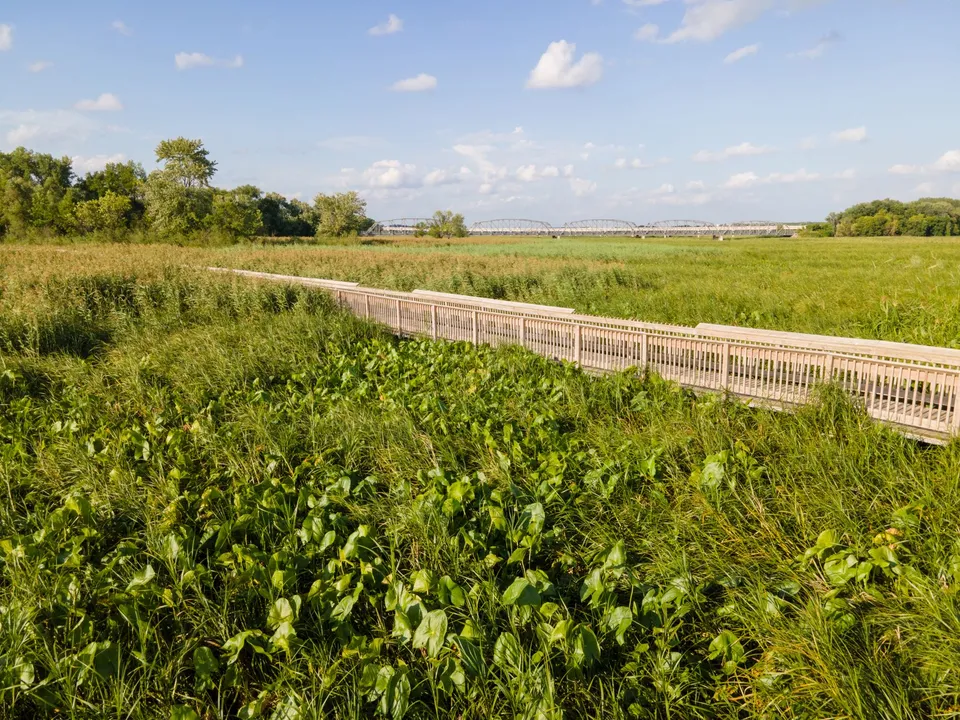
Today, the arboretum describes forests, wetlands, gardens and walking and hiking trails. That mix gives it a different personality from a single-purpose park. A short visit can feel like a break from town, but it also feels local in a specific way: the paths are wrapped in the history of how Brainerd has changed.
That is part of the appeal. A preserve like this does not ask visitors to forget the past. It quietly shows what can happen when a community keeps investing after the useful life of a site seems to be over. For residents, that makes the arboretum more than scenery. It is an example of land being treated as a long-term civic asset.
A trail that still follows the old rail corridor
The other half of the story runs on a very different kind of line. The Paul Bunyan State Trail primarily follows a former Burlington Northern Railroad grade, stretching between Crow Wing State Park and Lake Bemidji State Park. The Minnesota DNR also identifies access and parking in Baxter and other communities along the route.
That rail history is not trivia. It helps explain why the trail feels so direct and usable. Railroad grades were built to keep movement steady and efficient, and the trail inherits that shape. For people in the Brainerd area, that means the route is not just a recreational path in the abstract. It is a piece of regional infrastructure that still organizes how people move through the landscape.
It also helps to distinguish the local segment from the full trail. The Paul Bunyan State Trail is part of a much longer corridor, but the Brainerd-Baxter access points make it especially useful for local riders and walkers who want a clear, established route without having to improvise their way through traffic or unfamiliar roads.
Why these two places matter together
The arboretum and the trail are different kinds of reuse. One turned a landfill into a preserve. The other turned a railroad grade into a recreation corridor. Together, they show two different Brainerd instincts: restore land that has been used up, and keep old corridors useful when their original job is done.
That helps explain why the area feels practical as well as scenic. Many communities have parks. Fewer have places that reveal, so clearly, how the ground itself has been repurposed. In Brainerd, that story is visible enough to shape how people plan an afternoon walk, a bike outing, or a quiet route between neighborhoods and nearby towns.
It also offers a reminder for newcomers and longtime residents alike: if you want to understand a place, pay attention to what it chose not to erase. Brainerd did not erase the landfill or the railroad grade. It rebuilt around them.
A useful way to think about the Brainerd Lakes Area
This matters for visitors, but it matters for locals too. The easiest reading of Brainerd is often lakes, cabins, and seasonal traffic. Those things are real. But the deeper story is how the community keeps reworking the land beneath everyday life.
That is why a trip to Northland Arboretum can feel like more than a nature stop, and why a ride on the Paul Bunyan State Trail can feel more than exercise. Each one is a local example of reuse with purpose. Each one shows that the Brainerd area is still being edited in plain sight.
If you want the simplest takeaway, it is this: Brainerd’s most interesting green spaces are not only beautiful. They are evidence. They show what happens when a community decides that old ground can still carry new value.
For anyone planning a walk or ride, the official pages are the best place to start: the arboretum explains its own history and layout, and the DNR outlines the trail corridor and access points. But the bigger lesson is easier to grasp than any map. In Brainerd, the past is not always something you pass by. Sometimes, it is the reason you have a place to go.