
Brainerd’s Best “Then-and-Now” Walk: Two Places Where the Past Still Shapes the Path
Brainerd has a knack for turning yesterday’s infrastructure into today’s everyday escapes. You can see it in two places many locals use casually—often without realizing the backstory underfoot.
One began as a landfill and became a nonprofit nature preserve. Another began as a railroad corridor and became a long-distance trail. Together, they offer a simple way to understand a bigger Brainerd-area pattern: the landscape keeps changing, but it doesn’t start over.
Stop 1: A nature preserve built on the old landfill
The Northland Arboretum describes itself as a nonprofit nature preserve in Brainerd and Baxter, and it’s not shy about its origin story: it was founded in 1972 on the former Brainerd landfill site. That single fact changes how you look at the place—because it’s not just “nice woods,” it’s a real example of land being reclaimed and reimagined. Read their own description at the Northland Arboretum website.
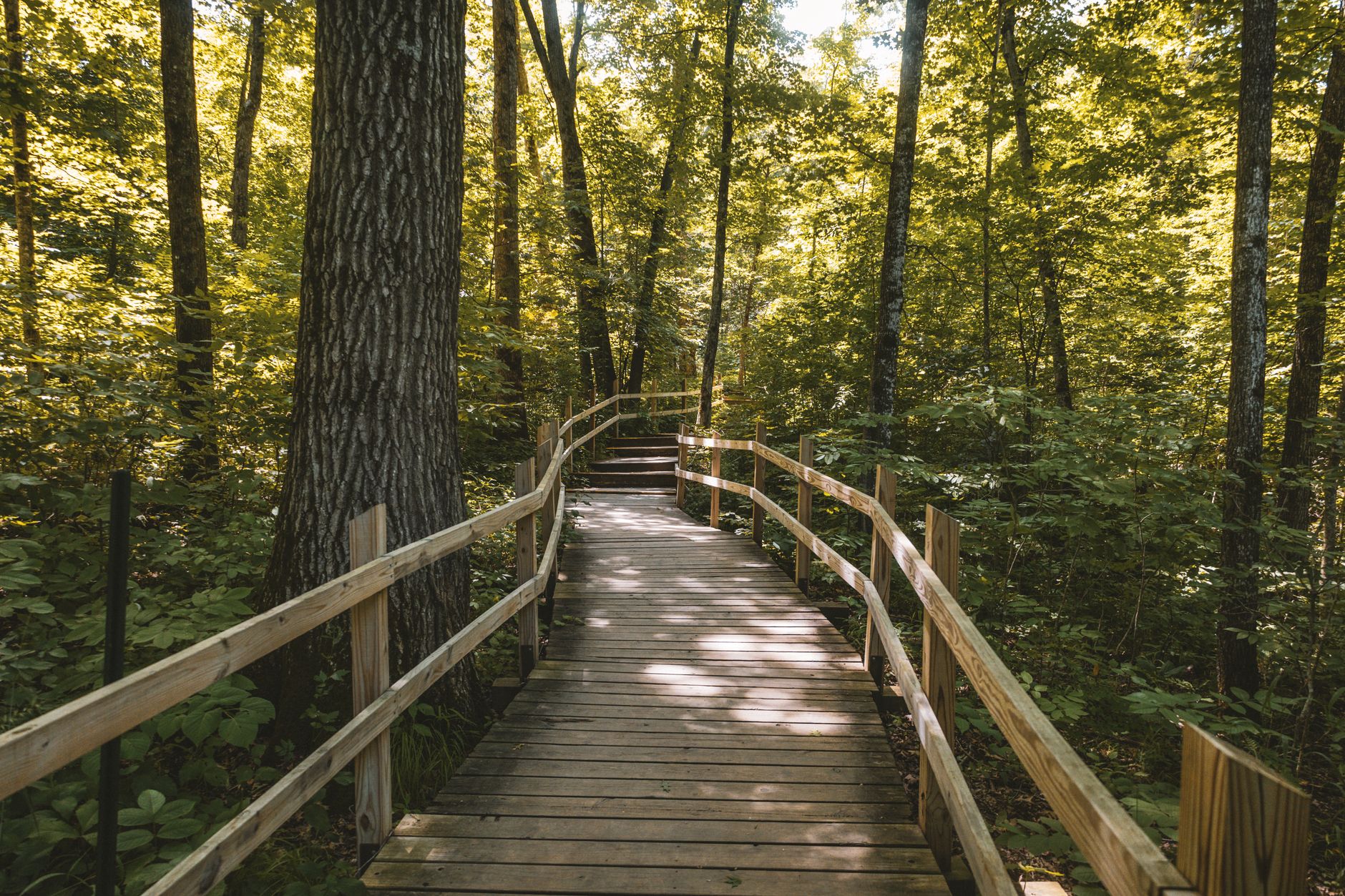
The Arboretum also describes its mix of forests, wetlands, gardens, and walking/hiking trails. That variety matters because it helps explain why this site feels like more than one kind of outing: you can come for a short, quiet loop when you need a reset—or treat it like a living classroom where every bend in the path is a different environment. Northland Arboretum
A useful way to “read” this place:
- Notice how the trail experience shifts between forested cover and open, wetter areas.
- Pay attention to the edges—where one habitat transitions to another.
You don’t need to be a naturalist to enjoy it. The point is simpler: Brainerd didn’t just set land aside; it changed what the land was for.
Stop 2: A trail that follows a railroad grade
Now zoom out from one preserve to a regional corridor.
The Minnesota DNR describes the Paul Bunyan State Trail as primarily following a former Burlington Northern Railroad grade—a straightforward sentence that explains a lot about how the trail behaves: long, steady stretches; gentle curves; a feeling that the route was engineered for travel. Minnesota DNR: Paul Bunyan State Trail
The same DNR page also notes that the trail extends between Crow Wing State Park and Lake Bemidji State Park, and it identifies access/parking in Baxter (among other communities). That Baxter access detail is practical for Brainerd-area readers because it’s one of the clearest “entry points” into a much bigger route—whether you plan to go a mile or make a day of it. Minnesota DNR: Paul Bunyan State Trail
A useful way to “read” this place:
- Look for the straightness and the consistent grade—the trail is doing what trains needed it to do.
- Imagine the corridor as a connector first, a recreation space second. That mindset makes it easier to plan trips: it’s designed to go somewhere.
The bigger Brainerd-area lesson: land gets reused, not erased
Put these two stories side by side and you get a local insight you can carry anywhere in the Brainerd Lakes Area:
- Sometimes “nature” here is also a restoration story (like the Arboretum’s former landfill site).
- Sometimes “outdoors” here is also a transportation story (like a trail built on a railroad grade).
That’s not just trivia. It changes the kinds of questions you ask:
- What used to happen here, and what does that make possible now?
- Why does this route feel easy (or surprisingly direct)?
- What other everyday places in Brainerd might have a past life you’ve never noticed?
A simple two-stop afternoon (no overplanning required)
If you want a low-stress way to experience both “then-and-now” transformations without turning it into a production, try this:
- Start with a short walk at the Northland Arboretum and focus on transitions—forest to wetland, garden to trail, open to sheltered.
- Then visit the Paul Bunyan State Trail from a Baxter access point and pay attention to the feel of the corridor: the steady grade, the sense of direction, the way it invites you onward.
No need to chase mileage. The win is noticing how Brainerd’s landscape works.
One last practical note: don’t assume the whole area runs the same
Even within the Brainerd Lakes region, services can vary by location. For example, Brainerd & Crow Wing Public Transit publishes separate Brainerd/Baxter and county service information, which is a helpful reminder that “local” doesn’t always mean “identical everywhere.” If you’re planning how you’ll get around on a future visit or a day off, start with their official pages and match your plan to the correct service area. Brainerd & Crow Wing Public Transit
Brainerd’s best stories aren’t always in a museum—sometimes they’re in the ground beneath the trail, or in the purpose a place has outgrown.