
Brainerd’s Best Places Are the Ones That Got a Second Life
Some of Brainerd’s most useful places did not start out as attractions. That is what makes them worth noticing. A former landfill became a nonprofit nature preserve. An old railroad grade became a state trail. Even the way people move around the Brainerd-Baxter core is shaped by systems that are practical before they are picturesque. In other words, Brainerd is full of places that matter because they were reused well.
A landfill turned into a place people seek out on purpose
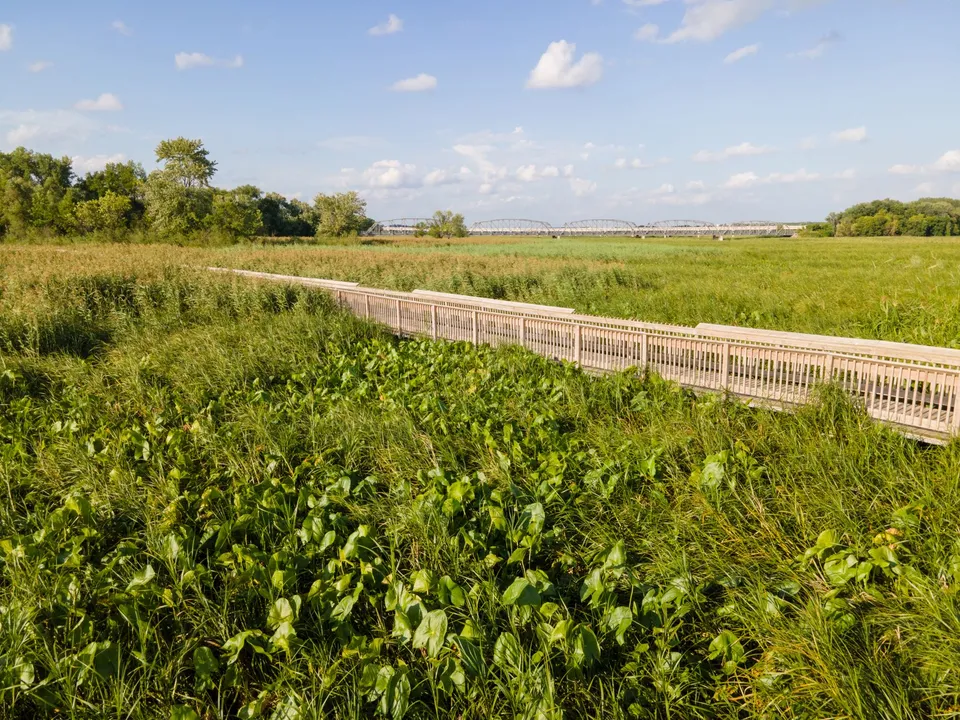
Northland Arboretum describes itself as a nonprofit nature preserve in Brainerd and Baxter, founded in 1972 on the former Brainerd landfill site. That origin story changes how you read the landscape. The arboretum is not just “some woods on the edge of town”; it is a deliberate reclamation of land, with forests, wetlands, gardens, and walking and hiking trails layered onto a place that once had a very different purpose.
That matters for everyday Brainerd because it turns a local curiosity into a practical example of what can happen when a community reclaims space instead of letting it sit as a leftover. A walk there is not only recreation. It is a reminder that the city’s edges are not fixed. They can be repaired, reimagined, and brought back into daily use.
The trail that follows yesterday’s transportation map
The same pattern shows up on the Paul Bunyan State Trail. The Minnesota DNR says the trail primarily follows a former Burlington Northern Railroad grade and stretches between Crow Wing State Park and Lake Bemidji State Park, with access and parking in Baxter. That detail is more than background. It explains why the trail feels so continuous and so connected to the region’s past.
A railroad grade is already a built corridor: relatively level, efficient, and stitched through communities with purpose. When that corridor becomes a trail, the shape of the old system still helps define how people experience the new one. For Brainerd-area residents, that means the trail is not just a scenic amenity. It is one of the clearest examples of how older infrastructure can still serve a newer way of life.
It also helps distinguish the Brainerd segment from the larger whole. People sometimes speak about the Paul Bunyan Trail as if it were a single local path, but the official route is a much longer north-south spine. That makes Baxter’s access points and the Brainerd-area connection especially important for anyone planning a ride, a walk, or a slower kind of day outdoors.
The less glamorous system that still shapes the whole experience
The second life story in Brainerd is not limited to parks and trails. It also shows up in mobility. Brainerd & Crow Wing Public Transit operates Brainerd/Baxter dial-a-ride service on weekdays from 6:00 a.m. to 6:00 p.m., with dispatch hours from 7:30 a.m. to 4:30 p.m.; the service also extends beyond the core to the Crosby and Pequot Lakes areas of Crow Wing County and the Pine River area of Cass County.
That is a useful detail because it shows the Brainerd Lakes Area as a network, not a single border. The city’s daily movement depends on more than personal cars and more than one municipality. Transit makes the core easier to reach, but it also ties Brainerd to neighboring communities that might otherwise feel separate on a map.
The fare structure reinforces that this is a managed public service, not a generic catchall. The City of Brainerd’s transit page distinguishes Brainerd-originating and Baxter-originating trips, which tells you the system is built around real travel patterns rather than a one-price-fits-all model.
Why this pattern is worth paying attention to
Brainerd’s “second-life” places do more than offer things to do. They explain how the community works. A landfill became a preserve. A railroad grade became a trail. A local transit system keeps Brainerd and Baxter linked while extending selected service into the wider county. That pattern is useful because it reveals a town that has learned how to reuse what it already has.
If you live here, that means the next good outing may be hiding in a place that used to serve a very different job. If you are visiting, it means the most interesting Brainerd story may not be a single landmark at all. It may be the way old corridors and damaged ground have been turned into places people still use every day.