
Brainerd is easy to describe as a city, but the more useful way to understand it is as a shared-service hub. The people who live here do not stop at the city line when they head to work, book a ride, pay a utility bill, or think about where the next generation will learn a trade. In practice, Brainerd runs on a network of institutions that reaches into Baxter, surrounding townships, and nearby communities across Crow Wing County and beyond.
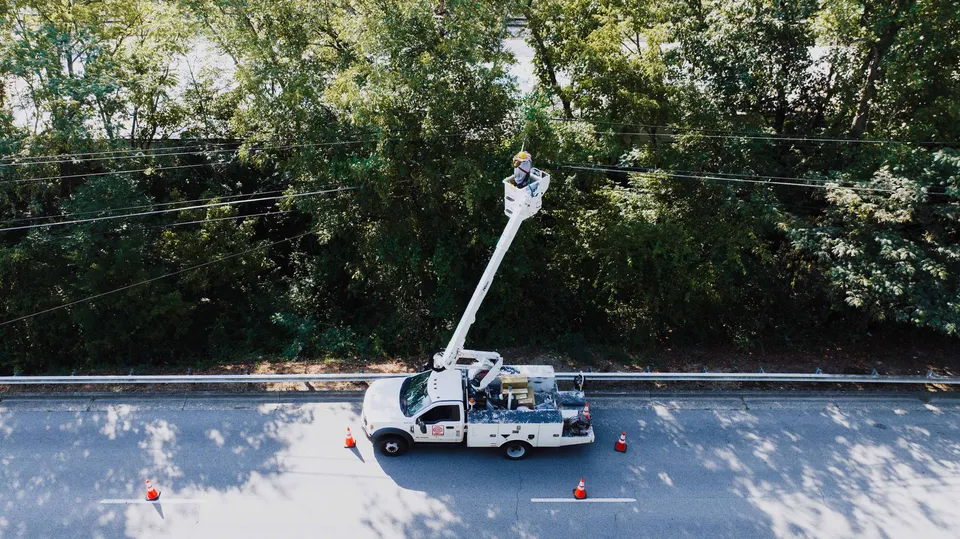
That matters because the area’s best-known systems are not built for one neighborhood alone. Brainerd Public Utilities says it has served the community since 1892 and provides electric, water, and sewer service in Brainerd, parts of Baxter, and surrounding townships. Its audited financial statements also note that it provides electric distribution to portions of Baxter and treats 100% of Baxter’s wastewater. That is not just a utility note; it is a reminder that the local map is more connected than it first appears.
Transit tells the same story. Brainerd & Crow Wing Public Transit operates weekday service from 6:00 a.m. to 6:00 p.m., with dispatch hours from 7:30 a.m. to 4:30 p.m. and an A.I. dispatcher available outside regular hours for booking, canceling, and monitoring trips. The service is not limited to a narrow city use case. The Minnesota Board on Aging listing describes a service area that includes the Brainerd, Baxter, Crosby, and Pequot Lakes areas of Crow Wing County, plus the Pine River area of Cass County. In other words, Brainerd transit is a regional tool for getting people to jobs, appointments, and errands when driving is not practical or not available.
The fare structure even shows how carefully the system is managed. Advance booking costs less than same-day service, and the price differs depending on whether the trip originates in Brainerd or Baxter. That kind of pricing is often invisible to people who do not use the service, but it reveals something important: mobility here is planned, rationed, and coordinated, not taken for granted.
Brainerd Lakes Regional Airport is another piece of the same puzzle. MnDOT’s airport directory identifies BRD as an airport with ground-transport options that include Brainerd & Crow Wing Transit, alongside rental cars and taxis. The airport is not just a symbol of arrival for visitors; it is part of how local residents, employers, and service providers stay connected to a larger region. For a place that depends on seasonal rhythms, healthcare access, and regional commerce, that connection matters.
Education and training are part of the same network too. Central Lakes College publishes program listings, tuition information, and a catalog that makes it easier to see what a local credential actually involves. The college’s registration guide lists estimated tuition and fees for 2025–2026 at $220 per credit, with some programs carrying additional costs. That makes CLC a practical pathway for residents who want a credential without leaving the area for long stretches of time. In a city where the workforce is spread across healthcare, retail, transportation, public service, and skilled trades, that kind of access matters.
The population and housing numbers help explain why shared systems are so important. Brainerd’s population estimate was 14,400 in July 2024, while Baxter’s was 9,217 in July 2025. Brainerd’s median gross rent was $848, compared with Baxter’s $1,154, and Baxter’s median owner-occupied home value was notably higher as well. Those differences suggest two adjacent cities with related but distinct housing markets. They also show why it is a mistake to assume one service model fits everyone in the same way.
Commuting data reinforce that point. A Crow Wing County inflow/outflow report shows substantial two-way movement of workers: many people live in the county and work elsewhere, while many others live outside the county and work inside it. That is a regional labor market, not a closed local bubble. Brainerd’s economy reflects that role, with QuickFacts showing major activity in healthcare, retail, and transportation and warehousing. Those are classic service-center sectors, and they rely on reliable transit, utilities, roads, and training pipelines to keep functioning.
Seen this way, Brainerd’s biggest advantage is not a single landmark or a single street. It is the way everyday systems overlap. A person can live in one place, work in another, get to an appointment without a private vehicle, pay a utility bill through a municipally owned provider, and build job skills at a nearby college. That is what makes the Brainerd area resilient: it is less a collection of separate places than a working network that keeps people moving, learning, and staying connected.